Back to the ICU
by karenulijohn
Yesterday’s post was fairly upbeat, so you can be forgiven for being surprised by the title of today’s offering. At 6:45 AM this morning, I got a call from the hospital telling me that Harvey had been moved back to the surgical floor. When I asked why, the nurse said that he had gotten light headed and dizzy, his heart rate was too fast, and his blood pressure had dropped precipitously. When I called the new room number, I was told that he had only been on the surgical floor for about ten minutes, and was moved on to the ICU. That was when I learned that when his blood pressure dropped, so did he. Dr. Tandy telephoned me to say that Harvey’s heart was in atrial fibrillation and they were using drugs to bring it back into normal sinus rhythm. I was quite shaken by all of these events and decided the only place I wanted to be was there at the hospital with him.
When I walked into the ICU, I was relieved to see that he was sleeping peacefully, and there were no outward signs of trauma except for the cut on his nose. When he fell forward, he hit his nose on “Howard,” which is what he calls his “bag caddy.” He told me that he did not remember falling, but when he woke up on the deck, he said there were about fifteen people in the room. He was unceremoniously picked up by two men and placed gently on the bed. A few minutes later they took him to have a CAT scan of his head to make sure he had not injured himself. Harvey’s nurse filled me in on what they were doing for him and said that I would be included in the Doctors’ rounds when they discussed Harvey’s case.
The most substantive element of that discussion was that as a result of the colitis, Harvey had developed sepsis:
“Sepsis itself isn’t an infection; rather, it’s our body’s overreaction to an infection we already have. Even if you treat it early, any infection—a simple cut, a urinary tract infection or a more serious illness such as pneumonia—can set off a systemic inflammatory response: The immune system fires out defensive cells and chemicals in a chain reaction, and the body responds like an engine revving out of control. The heart races. Blood pressure plummets. The walls of veins and arteries turn permeable, and the liquid part of the blood leaks into the rest of the body, depleting the blood volume within the vessels and making it harder for them to carry oxygen into tissues. Without oxygen, the brain and other organs begin to die. www.self.com/health/2012/01/saving-carol-decker”
This defines Harvey’s condition to a “T.” They are continuing to hydrate him, plus he had a transfusion of two units of blood. He will probably be moved out of ICU tomorrow, going back to the surgical floor. I spent the better part of six hours with him today, and observed the care that he was getting. I am very satisfied that he is being well looked after. The photograph below was taken in ICU this afternoon showing Harvey looking much more like himself, and “Howard” standing like a sentinel behind him.
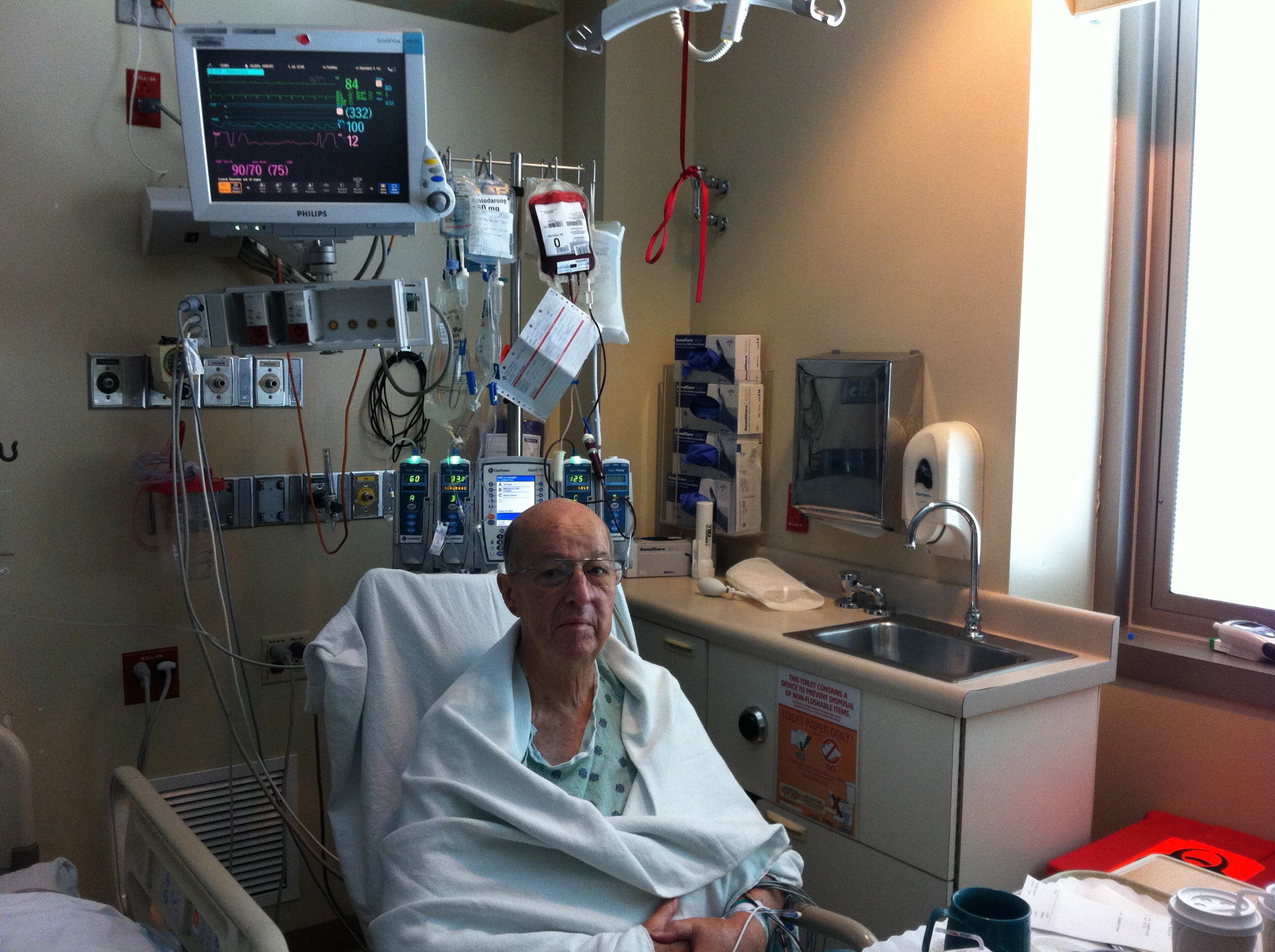
Harvey and “Howard”
 karenulijohn
Yes you described my reaction perfectly. So sorry to hear of Harvey’s sepsis. A friend’s daughter had it after surgery for kidney stones. They told her it would take quite a while to recuperate. Here’s looking forward to a quick recovery for Harvey and strength for you to get through this with him. I have been constantly impressed with the care he has been getting at Sutter. Good to know for future reference since we are covered at their facility. Take care.
He looks much better in the picture with ‘Howard’. What a roller coaster! Anything I can do to help? Would he like visitors. Dave said to tell him, he’d better hurry up his convalescence, because Dave really is looking forward to pie.
________________________________
I’ll definitely tell him about the Pie! I think he would rather have visitors once he gets home. So, let’s hold off for a few days and see how things go.
I just can’t believe what you and Harvey have been through. It is too much! We are all here for you for whatever you might need. Sending lots of love to you both.
Oh my gosh, what a ride you two have been on. I am sure you would like to get off this roller coaster and get your feet on the ground. Please know that you both are in my prayers and here for you if you need help. Keep strong.
Love and hugs, Carolyn